

Taking Activism To The Frontlines: Letzrise in New Delhi with Animal Care India
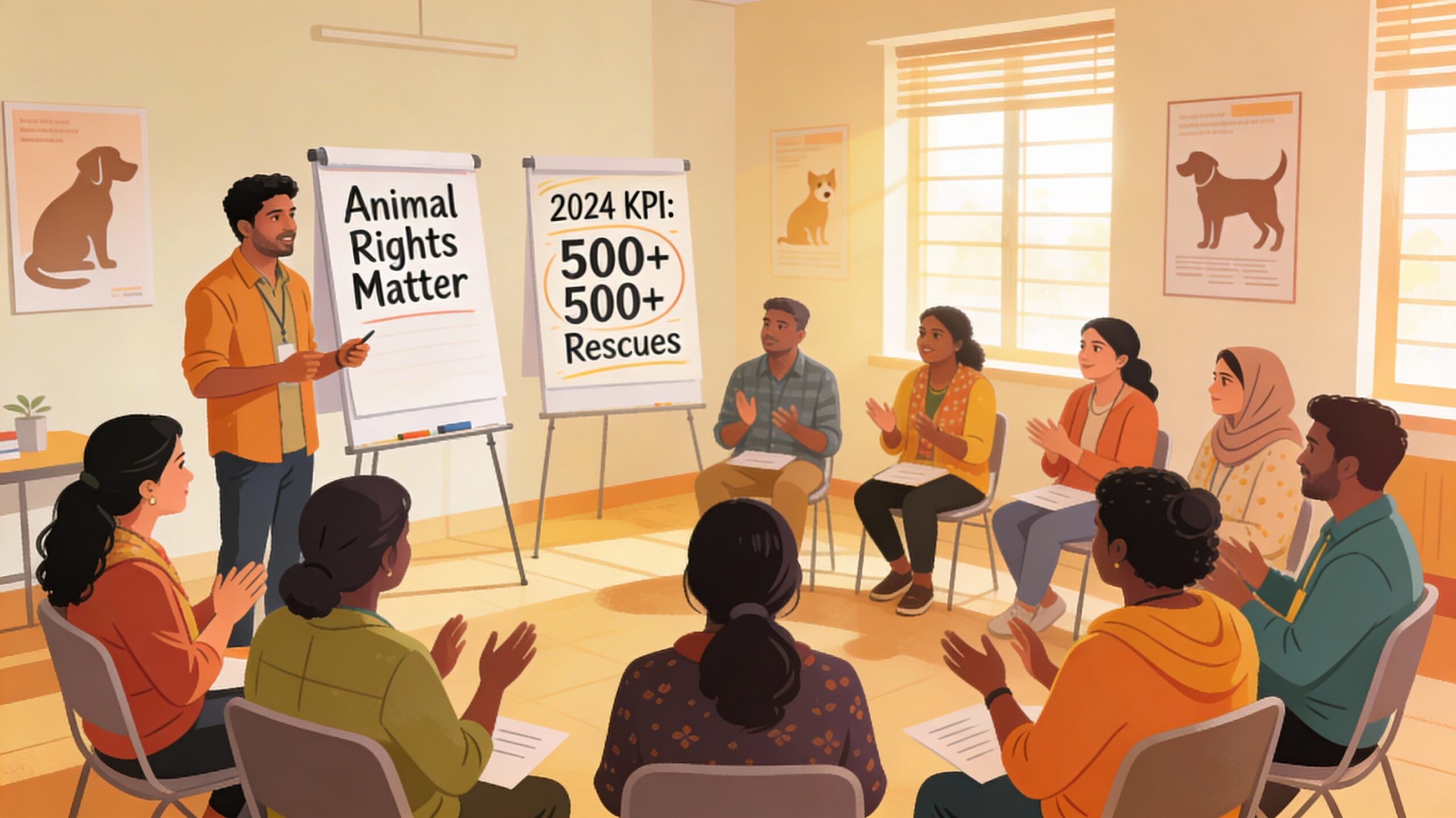
Letzrise marked an important milestone this year by placing its footprint in the northern part of the country—this time in the capital, New Delhi. Over three intensive days, a full Learning & Development journey was delivered for Animal Care India Foundation, with the entire organisation in the room: from the Founder and Trustees to the newest recruits. The core intent was clear—to deepen activism for animal rights and turn that conviction into stronger conversations, systems and leadership across teams.
A Whole-Organisation Learning Journey
What made this engagement unique was its truly organisation-wide design. The leadership team (Founder, Trustees, General Manager, team leaders) and members from every key function—Programme, Fundraising (Face-to-Face and Tele-calling), Finance and Compliance, Data and Technology—all came together in one common learning arc.
The three-day structure was simple and purposeful:
- Day 1: Tele-calling skills, systems and scripts.
- Day 2: Face-to-face public engagement and fundraising.
- Day 3: Leadership, data, dashboards and cross-team coordination.
Each day built on the previous one, so that individual skills, team culture and organisational systems moved forward together.
Day 1: Tele-calling With Purpose and Precision
Day 1 focused on the tele-calling ecosystem, with tele-calling team leads, the tele-calling head, callers, Founder and Trustees all participating. The design started from why the work matters and moved into how to do it better every single day.
Key shifts and outcomes included:
- A clearer understanding of the history of the animal rights movement in India and globally, helping callers root their pitch in a larger struggle, not just a script.
- Introduction to the “narrative loop” for storytelling—learning how to open, build context, show impact and close with a clear, respectful ask.
- Practical strategies to convert “cold” market data into “warm” data, and to use high-value data sets for more stable donor acquisition instead of one-off campaigns.
- A revised tele-calling script co-created with the team, along with operational tips for better turnaround, objection handling, monthly-giving transitions and CRM notes.
Day 2: Face-to-Face Activism, Not Just Sales
Day 2 brought together the General Manager, four team leads, F2F field executives, Founder, Trustees, the entire tele-calling team, and colleagues from Finance, Admin and Programme. The intention was to reclaim face-to-face fundraising as a form of public engagement and activism, not just a sales channel.
The team worked through:
- How to become better public engagement activists first, and then honest, transparent fundraisers who can stand by every word they say.
- Ways to sync personal goals (growth, stability, pride in work) with organisational goals so that both can be achieved without burnout.
- How to hold the balance between “sales” and activism in real conversations on streets, in malls, RWAs and corporate spaces, including simulations using tough donor mindsets and personas.
- Using storytelling to increase acquisition output, identifying and resolving disputes within teams, exploring real growth pathways for F2F executives, and judging the quality of a pitch, not just the quantity of sign-ups.
Day 3: Leadership, Law and Living Dashboards
Day 3 was dedicated to leadership: Founder, Trustees, General Manager and team leads came together to look at the organisation from the top, with a future-facing lens.
The leadership space was used to:
- Strengthen understanding of animal rights law in India and connect it to day-to-day decisions on the ground.
- Identify gaps across the organisation—whether in handovers, data use, communication, or team motivation—and then co-create practical SOPs for each gap with clear delegation and responsibility mapping.
- Translate the vision for animals into 90-day goals and KPIs for teams, design simple one-page dashboards, and set review rhythms so that data becomes a live management tool, not a report filed away.
- Explore difficult conversations using SBIR (Situation–Behaviour–Impact–Request), motivation micro-practices, and cross-team coordination rituals that make collaboration a habit.
Impact and Energy in the Room
Across the three days, feedback scores from participants ranged between 8 and 9 out of 10, reflecting both high relevance and high engagement. More importantly, teams left with shared language (activism, narrative loops, SBIR, KPIs), shared tools (scripts, dashboards, objection banks) and shared commitments for the next 30–90 days.
For Letzrise, this Delhi engagement with Animal Care India Foundation was more than a training assignment. It was a proof-point that when activism, structure and story come together, animal rights work can become sharper, more sustainable and more deeply rooted in every conversation—on the phone, on the street and inside the leadership room.
Written by Deb who is a social impact worker and part of Letzrise team and stays in Bengaluru.