

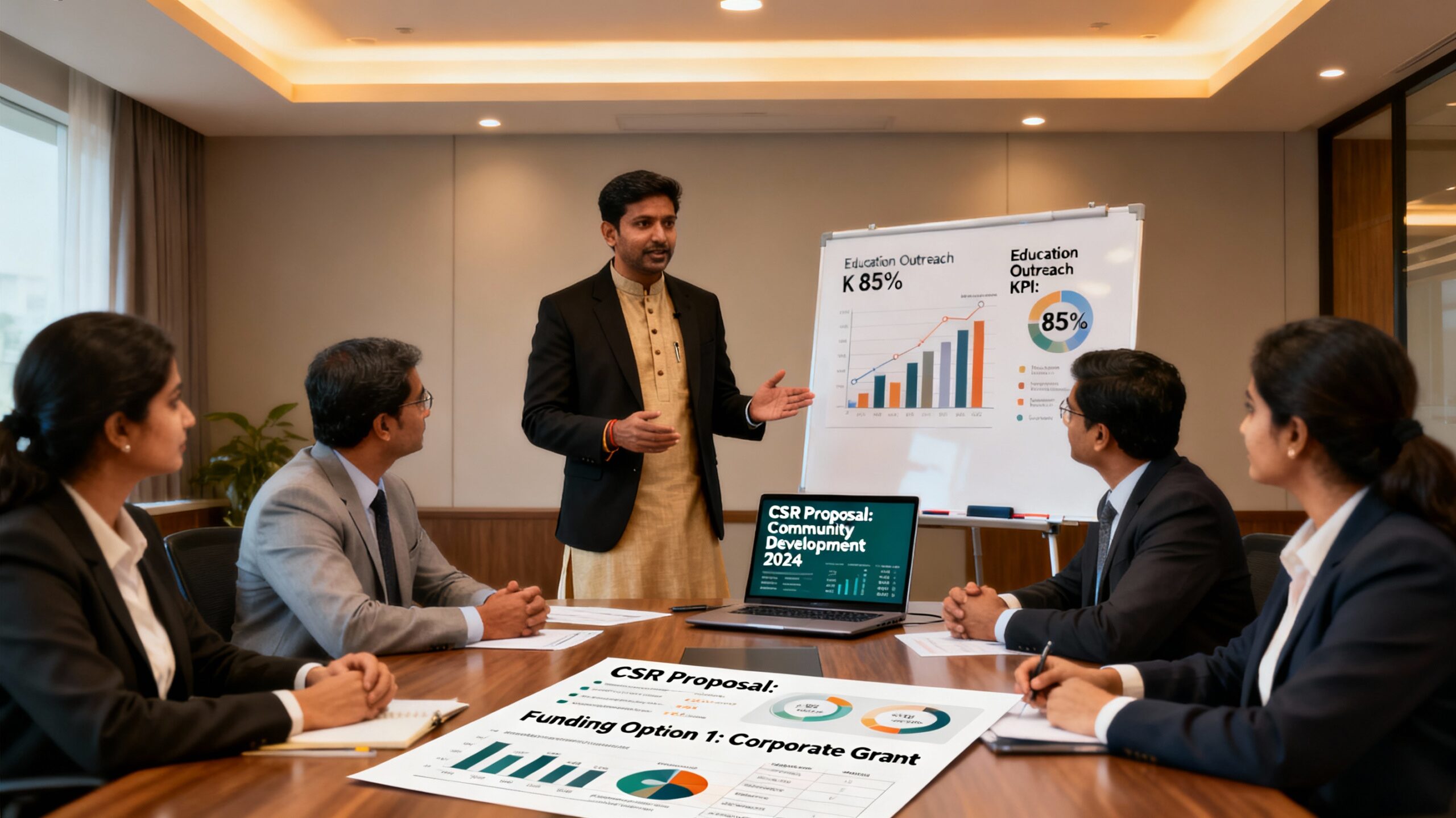
Many NGOs do powerful work, yet their CSR proposals land in a black hole. The reason is often simple: proposals look and feel generic, with little connection to a company’s specific CSR strategy, language, or priorities. In India’s CSR context, where companies clearly define thematic focus, geographies, and impact frameworks in their policies and reports, copy‑paste proposals stand out for the wrong reasons.
What works instead is a modular, custom‑built approach: keep your organisational backbone constant, but intentionally tailor the story, language, KPIs, and funding options for each corporate partner. This blog outlines a practical way to do that without reinventing the wheel every time.
Step 1: Build a Modular Proposal Template
Start with a master proposal that is 60–70% standard and 30–40% custom. The common section can cover your organisation profile, governance, legal compliances, track record, and financials, which most CSR donors in India expect to see in a structured format.
Then design dedicated “custom” sections where you adapt:
- Alignment with the company’s CSR policy, themes, geographies, and SDG priorities.
- Their preferred language and emphasis areas (for example, “sustainability”, “climate resilience”, “employee volunteering”, “flagship initiative”).
- References to their existing CSR initiatives and how your project complements or deepens that portfolio rather than duplicating it.
This way, your team works from one robust template but every corporate still feels uniquely addressed.
Step 2: Add a “Why You + Why Us + Why Now” Note
Before the detailed proposal, include a crisp 1–2-page cover note that answers three questions from the donor’s lens. Many CSR and grant‑writing guides recommend a short, compelling front section because decision‑makers are time‑poor and scan for fit quickly.
Structure it as:
- Why you: Why this theme matters to their business, CSR vision, SDG commitments, or geography of interest.
- Why us: Why your organisation and model are a strategic fit, backed by evidence, credibility, and implementation capacity.
- Why now: Why the timing is right, linking to regulation, new CSR focus areas, expansion into new regions, or emerging risks and opportunities.
This note should feel like it was written only for them, not for “Dear Sir/Madam – To Whom It May Concern”.
Step 3: Mirror Their KPIs, Not Just Yours
Many CSR reports and partnership pages clearly list outcome ambitions such as learning improvements, income enhancement, employability, environmental gains, or inclusion metrics. If they say, “We want to deepen learning outcomes for children,” simply promising “X number of workshops” is misaligned.
Instead:
- Translate your log frame and M&E plan into indicators that mirror their aspirations: for example, learning outcome improvements using ASER‑type tools, baseline and endline scores, attendance, retention, or completion rates.
- Show how your indicators will contribute to their SDG and CSR reporting, including narrative case studies and quantitative dashboards that plug easily into their disclosures.
When corporates see their own language and KPIs reflected back, they recognise you as a partner who understands their accountability pressures.
Step 4: Offer 2–3 Clear Funding Options
Instead of sending a single “take it or leave it” budget, present 2–3 well‑thought‑out options. Many CSR strategy resources suggest tiered models because they help donors choose a comfortable entry point while seeing the potential to scale.
For example:
- Basic model: Limited geography, focused component, lower ticket size.
- Standard model: Moderate scale with stronger monitoring, storytelling, and visibility.
- Flagship model: Multi‑location or multi‑year engagement, deeper outcomes, employee volunteering, and prominent branding.
Make sure each option has a clear set of activities, outcomes, and budgets, rather than just scaling the same line items mechanically.
Step 5: Track Customisation Through KPIs
To make customised proposal writing sustainable, treat it as a system, not a one‑off effort. Fundraising best‑practice guides increasingly recommend tracking conversion‑linked metrics instead of only counting how many proposals were sent.
Useful KPIs include:
- Proposal‑to‑discussion conversion rate: Percentage of submitted proposals that lead to a meeting or call.
- Number of customised proposals per quarter compared to generic ones.
- Average time taken to prepare a customised proposal, so you can streamline your internal process.
- Feedback quality from corporates, especially when they mention “alignment”, “fit”, or “relevance” in their responses.
Over time, these indicators help you see which types of customisation drive real engagement and where your proposal development process needs more templates, tools, or team capacity.
Written by Deb who is a social impact worker and part of Letzrise team and stays in Bengaluru.