

When Children Design a city
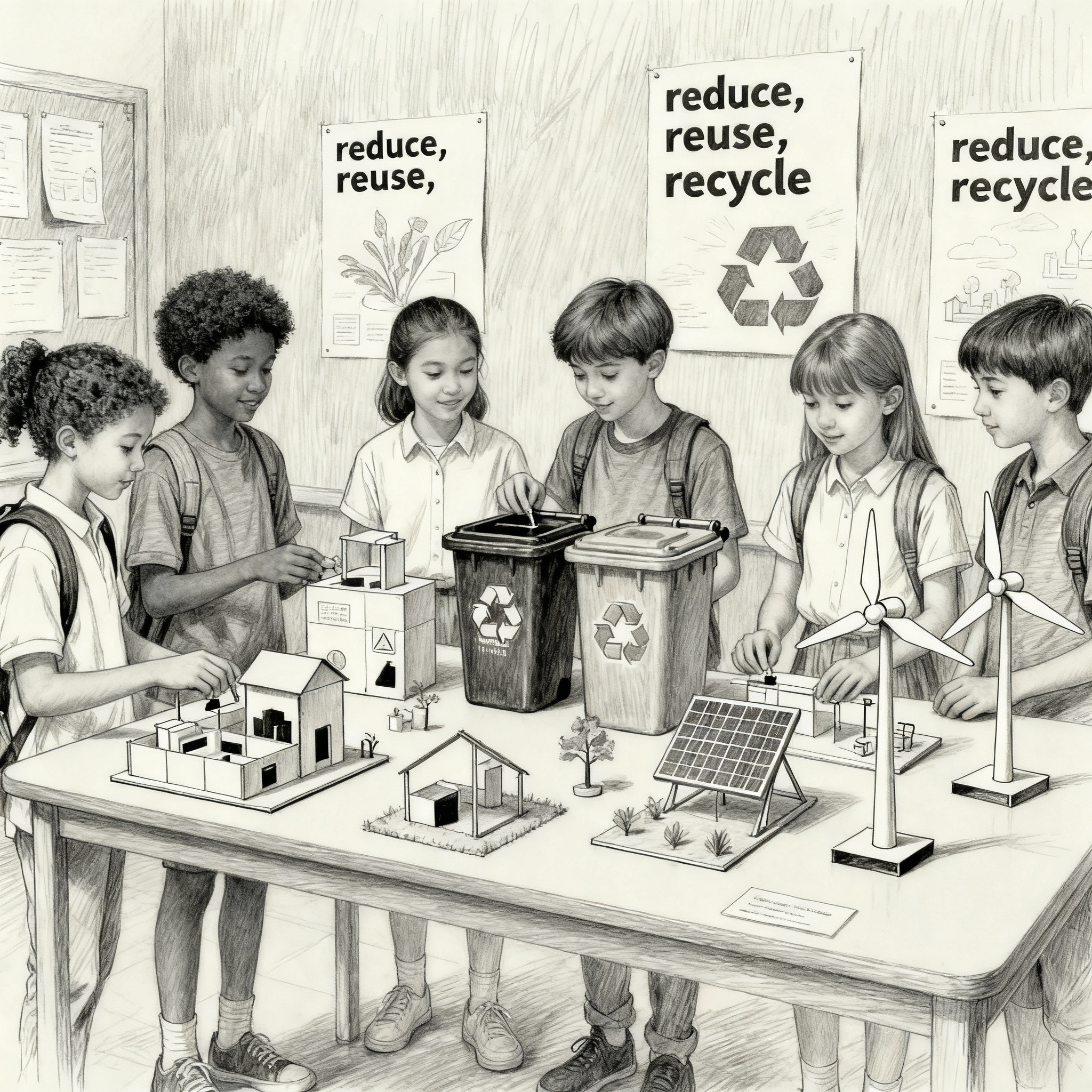
Walking into a sunlit courtyard in South Bengaluru, rows of nearly a hundred student-led stalls felt less like a school exhibition and more like a miniature city in motion, divided thoughtfully between junior and middle sections that hummed with purpose.
What stood out was not the scale but the clarity—seven to thirteen-year-olds framing problems like waste segregation, plastic cutlery reduction, and sustainable fashion with a confidence that comes only from seeing their city as a shared home.
Design Thinking in Little Hands
Across the boards and posters, the classic flow of empathize, define, ideate, prototype, and test showed up in simple language and confident voices, making the process tangible and kind.
By observing real users, reframing the problem, sketching ideas, building quick models, and inviting feedback, these learners practiced a user-centered loop that is iterative rather than linear—and profoundly inclusive.
Waste‑Wise Bengaluru, One Habit at a Time
The children’s projects connected naturally to the city’s “two bins and one bag” approach—wet, dry, and hazardous kept apart from doorstep to destination—demonstrating how design at school can reinforce design in civic life.
Their ideas echoed national guidance that elevates source segregation, material recovery, and circularity as the backbone of urban waste management, reminding everyone that policy meets reality only when daily practices become culture.
Prototypes With Purpose
From reusable parcel solutions that remove plastic cutlery to upcycling used chalk into pigments for paints, the prototypes favoured practicality over perfection—and that is where innovation quietly thrives.
Solar panels spun tiny fans, wind-powered models lit small bulbs, and “PET-bottle reverse vending” concepts issued coupons for community rewards, tying behavior change to dignity and delight.
Teams mapped how to involve government departments and neighbourhoods, showing not only how their products work but how people work together when given a shared incentive and a simple path.
A City Aligned to SDG 11
What unfolded in those classrooms resonated with Sustainable Development Goal 11—making cities inclusive, safe, resilient, and sustainable—because the children designed for people first and systems second.
They were building the habits that resilient communities need: empathy for users, access for all, greener public spaces, and everyday choices that shrink a city’s footprint while expanding its sense of belonging.
Collaboration Is the Curriculum
Behind every model was a team rhythm—listening, sketching, testing, and refining—mirroring the same collaboration that strong civic systems and ethical fundraising rely on when scaling impact across communities.
The work honored those who keep our cities moving—from waste workers to local administrators—by designing with them, not for them, and by making value visible beyond the landfill gate.
What Schools Make Possible
Spending a day at Ekya Schools (BTM Layout) felt like watching civic imagination become a routine skill, where “reduce, reuse, recycle” is less a slogan and more a practiced muscle.
If such mindsets take root at seven, they will grow into streets that segregate, markets that refuse single-use, and neighbourhoods that measure prosperity in shared well-being as much as in GDP.
A Collective Promise
Here’s the quiet revelation: children don’t just need better cities—they are already drafting them, inviting adults to fund, mentor, and remove barriers so good ideas can meet good infrastructure.
United in purpose and generous in practice, a city becomes sustainable when schools, households, local government, and businesses co‑create the loop from intention to habit to policy—and these young designers have already shown the way.
Deb is a social impact worker and letzrise member who imparts traning and capacity building for change makers and lives in Bengaluru.