

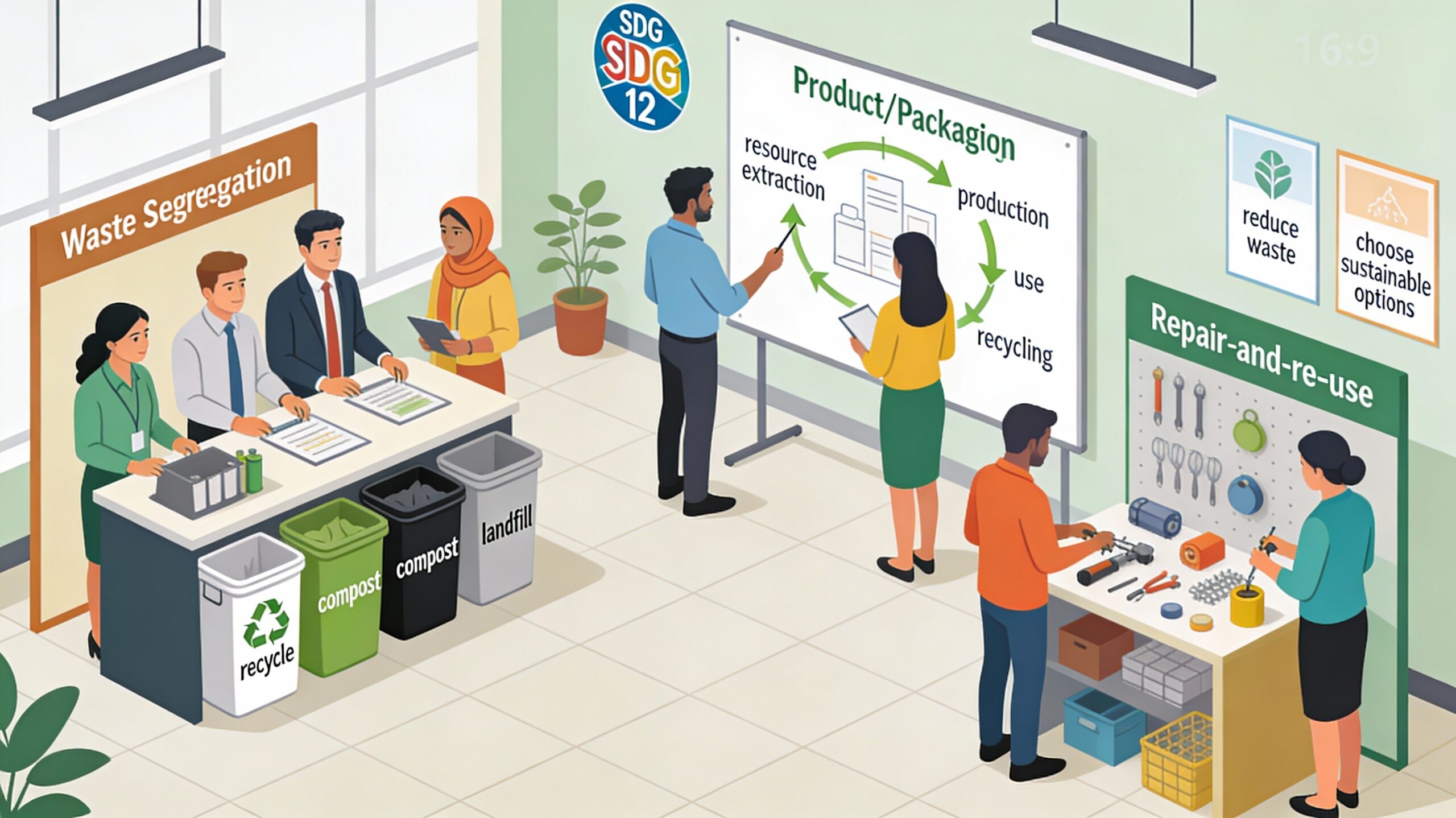
Why SDG 12 Belongs At The Heart Of Employee Engagement !
SDG 12, “Responsible Consumption and Production,” calls for doing more and better with less—using resources efficiently, reducing waste, and decoupling economic growth from environmental degradation. It covers everything from food loss and waste, chemicals, and materials to corporate sustainability reporting and consumer awareness.
For companies, SDG 12 is not just about waste bins; it sits inside supply chains, procurement, product design, packaging, and employee habits. NGOs can help CSR partners turn employee engagement into a structured program where people see how their daily choices—and their professional decisions—shape resource use and waste footprints.
Shift The Lens: From “No Plastic Day” To Responsible Systems
Typical “responsible consumption” engagement means no-plastic days, awareness posters, or one-off drives to switch off lights. These may generate photos and temporary enthusiasm, but they rarely change procurement practices, vendor expectations, or everyday behaviour in a lasting way.
An SDG 12–aligned approach looks at systems: how things are procured, used, shared, repaired, and disposed of. The goal is to move from symbolic actions to creating loops—reuse, repair, and recycling—while also reducing what comes in at the top of the funnel.
Step 1: Anchor The Program In SDG 12 Targets
Ground your proposal in specific SDG 12 targets that employee engagement can realistically influence:
- 12.5 – Substantially reduce waste generation through prevention, reduction, recycling, and reuse.
- 12.6 – Encourage companies, especially large and transnational, to adopt sustainable practices and integrate sustainability information into their reporting.
- 12.8 – Ensure people everywhere have the relevant information and awareness for sustainable development and lifestyles in harmony with nature.
Frame employee engagement as contributing directly to 12.8 (awareness and lifestyle) and 12.5 (waste reduction), with indirect support for 12.6 through better data and internal practices.
Step 2: Map Material Flows, Pain Points, And Employee Levers
Before designing activities, work with the CSR/sustainability team to map:
- Major material flows in offices and facilities: paper, packaging, food, e‑waste, office supplies, merchandise.
- Key pain points: single-use plastics, low recycling rates, food waste in cafeterias, unnecessary printing, underused assets.
- Where employees have real influence: everyday choices (food, printing, travel), team-level decisions (event design, vendor selection), and feedback into procurement and policy.
This mapping ensures your engagement plan is specific to the company’s context and not just a generic “green tips” campaign.
Step 3: Design A Year-Long SDG 12 Engagement Journey
An effective SDG 12 program can be framed as a year-long journey that builds from awareness to co-ownership:
- Quarter 1 – Awareness and audits: introducing SDG 12 and running simple waste and consumption audits.
- Quarter 2 – Quick wins: behaviour-change campaigns and small system tweaks.
- Quarter 3 – Circular pilots: repair, reuse, and recycling initiatives co-created with employees.
- Quarter 4 – Integration: feeding learning into policies, procurement, and reporting.
This structure helps CSR partners see employee engagement as an ongoing process with tangible milestones, not isolated events.
High-Impact SDG 12 Employee Engagement Formats
- SDG 12 Literacy Sessions And Consumption Diaries
Start with interactive sessions explaining SDG 12: why current consumption patterns are unsustainable and how waste, overuse of resources, and hazardous materials affect climate, biodiversity, and health. Use relatable examples—from food waste at home and office events to fast fashion, packaging, and gadgets.
Pair this with a “consumption diary” exercise where employees track a week of waste or purchases (food, packaging, online orders) and reflect on patterns. Facilitated reflection sessions help them connect personal habits with SDG 12 targets and company goals.
- Workplace Waste Audits And Redesign
Waste audits are a powerful way to make SDG 12 visible. With NGO facilitation, employees can:
- Conduct sample audits in cafeterias, workstations, and meeting areas.
- Sort waste into categories (organic, recyclables, e‑waste, multi-layer plastics, residual).
- Quantify major waste streams and identify avoidable items.
The results can feed into simple redesign decisions: switching to reusable serviceware, adjusting portion sizes, redesigning events as low-waste, and improving segregation infrastructure. This directly advances Target 12.5 on waste reduction.
- Repair, Reuse, And Sharing Corners
SDG 12 emphasises doing more with less by extending product life and promoting circularity. NGOs can help set up:
- Repair corners where volunteers and local partners help fix basic electronics, bags, or home items during periodic events.
- Swap and share corners for books, clothes (with dignity and hygiene protocols), and office supplies.
- Asset-sharing systems within the company for rarely used items like projectors, banners, or tools.
These formats reframe employee engagement from “donating old stuff” to building an internal culture of repair and resource-sharing.
- SDG 12–Aligned Green Procurement And Vendor Dialogues
Employees who manage budgets or vendors can be powerful levers for SDG 12. NGOs can design workshops and templates to help teams:
- Include basic SDG 12 criteria in vendor evaluations (e.g., packaging, take-back programs, recycled content, refill models).
- Run dialogues with key vendors about packaging reduction, bulk formats, or alternative materials.
Employee champions can then pilot revised procurement practices for events, gifts, and office supplies, with CSR and procurement teams capturing results for reporting under 12.6.
- Storytelling And Behaviour Nudges Around Everyday Choices
Behavioural science shows that small nudges and social proof can shift habits. Co-create with employees:
- Visual prompts at coffee stations, printers, and bins.
- Stories of teams that successfully cut waste or switched to sustainable options.
- Recognition for departments that demonstrate measurable improvements in SDG 12 indicators.
This keeps responsible consumption visible and aspirational without relying on guilt-heavy messaging.
Step 4: Governance, Data, And Safeguards
To sustain impact, SDG 12 engagement needs clear governance and basic data systems. Work with CSR and facilities teams to:
- Define responsibilities for maintaining segregation systems, tracking waste volumes, and updating staff.
- Set up simple dashboards that track waste, recycling rates, and key behaviour indicators over time.
- Ensure any donations or swaps are respectful, non-stigmatising, and aligned with community needs rather than used as a dumping channel.
NGOs can act as technical and ethical advisors so the program stays grounded and avoids “dumping in the name of CSR.”
Step 5: Metrics That Reflect Responsible Consumption And Production
Move beyond counting volunteers and events by defining SDG 12–aligned indicators such as:
- Reduction in total waste and in specific streams (e.g., single-use plastics, food waste).
- Increase in recycling and composting rates.
- Number of repair/reuse events, items repaired, and assets shared.
- Procurement shifts (e.g., % of events using reusables, vendors with take-back systems).
- Employee awareness scores on SDG 12 and reported lifestyle changes.
Connect these metrics to SDG 12 targets (especially 12.5 and 12.8) in sustainability reports and CSR dashboards.
Step 6: Storytelling That Normalises “Enough”
Responsible consumption is also about values—moving away from “more is better” to “enough is better.” NGOs can help curate stories of employees who found pride in reducing waste, repairing items, or influencing procurement decisions, showing that smart restraint is a sign of leadership, not sacrifice.
Share these stories with a clear SDG 12 framing and practical tips, so people see how to replicate them in their own teams and homes. Over time, these narratives can shift internal culture in favour of thoughtful use of resources.
Written by Deb who is a social impact worker and part of letzrise team and stays in Bengaluru.