

Why SDG 15 Needs Deeper Employee Engagement
SDG 15, “Life on Land,” is about protecting and restoring terrestrial ecosystems, sustainably managing forests, combating desertification, and halting biodiversity loss. Forests, grasslands, wetlands, and other ecosystems underpin food, water, climate regulation, and livelihoods, yet they continue to be degraded at alarming rates.
For CSR and ESG teams, SDG 15 is no longer just an “environment” checkbox—it is tied to supply chains, risk, and long-term resilience. NGOs can help corporates use employee engagement not just for one-off plantation drives, but to build a culture of stewardship that connects business decisions and everyday behaviours to land health and biodiversity.
Shift The Approach: From Counting Saplings To Restoring Ecosystems
Most SDG 15-linked CSR still revolves around tree-planting events where employees plant saplings, take photos, and leave. Without follow-up care, site design, or community ownership, many of these saplings do not survive and may even harm local ecosystems if species and locations are poorly chosen.
An SDG 15–aligned approach focuses on ecosystems, not events: soil health, water, native biodiversity, invasive species, local livelihoods, and long-term management. Employee engagement then becomes a multi-year journey in which staff help monitor, maintain, and advocate for healthy landscapes, instead of just planting and forgetting.
Step 1: Ground The Partnership In SDG 15 Targets
Begin by framing your work in the language of SDG 15: protecting and restoring forests and other ecosystems, combating desertification, reversing land degradation, and halting biodiversity loss. Highlight a few concrete targets relevant to your projects and the company context, such as:
- 15.1 – Conservation and restoration of terrestrial and inland freshwater ecosystems.
- 15.2 – Sustainable forest management, halting deforestation, and increasing restoration and afforestation.
- 15.3 – Combat desertification and restore degraded land and soil, aiming for land-degradation neutrality.
- 15.5 – Reduce habitat degradation and prevent extinction of threatened species.
Anchor concept notes, MoUs, and internal CSR decks in these targets so employee engagement is clearly linked to global and national priorities, not just local green branding.
Step 2: Map Your Ecosystem, Community, And Corporate Strengths
NGOs should start with a clear ecological and social map of their landscapes: the type of ecosystem (forest, scrub, urban fringe, wetland), key species, threats (encroachment, overgrazing, invasive species, pollution), and community relationships. Understanding existing rights, customary practices, and local conservation initiatives is critical to avoid conflict or tokenism.
Next, map how the corporate partner connects to SDG 15 through its operations and expertise: land footprint, water use, sourcing, logistics, technology, and data skills. Employee engagement is most powerful when it uses corporate strengths—GIS, data science, process management, communication, or engineering—to strengthen ecosystem restoration and community stewardship.
Step 3: Design A Multi-Year Employee Engagement Journey
Rather than a once-a-year plantation event, curate a multi-year calendar that tracks the lifecycle of a landscape restoration effort. A simple arc might include:
- Year 1 – Learning, site selection, and co-design with communities.
- Year 2 – Implementation: planting, soil and water interventions, habitat inputs.
- Year 3–5 – Stewardship: monitoring survival, biodiversity indicators, and community use; adaptive management.
Within this arc, employee touchpoints can be designed across seasons—pre-monsoon site preparation, monsoon planting, post-monsoon survival monitoring, and dry-season water and soil work. This structure helps CSR teams understand that SDG 15 requires patience and consistency, not just annual events.
High-Impact SDG 15 Employee Engagement Formats
- Ecosystem Literacy Walks And Learning Sessions
Start with immersive, guided walks and short learning modules that unpack the local ecosystem: native species, hydrology, soil, land use history, and pressures. These can be led by NGO ecologists, community elders, or local forest department partners, with SDG 15 targets woven into accessible storytelling.
Follow up with short learning circles in the office or online, where employees connect what they saw with bigger questions like supply chains, water footprint, and climate risks. This builds emotional connection and basic ecological literacy before any hands-on intervention.
- From Plantation Days To Restoration Workdays
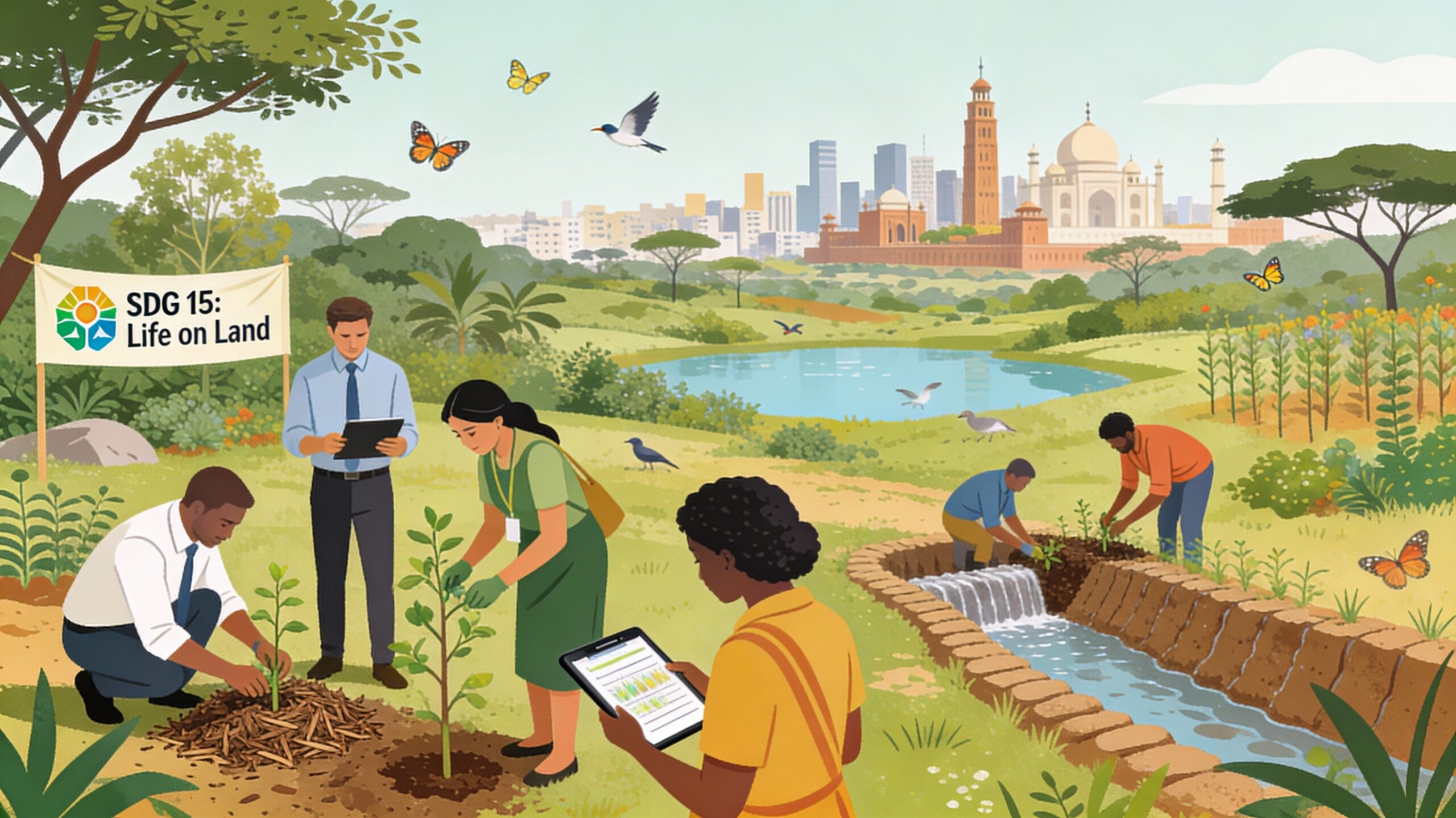
Transform “tree plantation days” into “restoration workdays” that include: soil preparation, mulching, water harvesting structures, protection measures, and post-planting care plans. Focus on native, climate-resilient species chosen with local communities and experts, aligned with forest and biodiversity guidelines.
Employees can be grouped into small teams responsible for specific patches, with simple tasks like mulching, installing guards, and recording sapling details in a shared monitoring app. This makes the activity more grounded and clearly linked to survival and ecosystem function instead of just numbers planted.
- Citizen Science And Biodiversity Monitoring
SDG 15 emphasises halting biodiversity loss, which requires better data on species and habitats. NGOs can turn employees into citizen scientists by training them to use simple tools (e.g., biodiversity apps, datasheets) to record birds, insects, plants, and signs of wildlife during periodic visits.
Corporate data teams can help clean, visualise, and analyse this data, turning it into dashboards that track changes over time and feed into local conservation planning. This format connects employees’ analytical strengths with on-ground biodiversity outcomes.
- Watershed And Soil-Health Stewardship
Land degradation and desertification (target 15.3) are closely linked to soil and water mismanagement. Employees can participate in structured activities like contour bunding, check-dam maintenance, desilting, and building organic matter through mulching and composting in collaboration with local communities.
Workdays can be paired with learning sessions on how these interventions support groundwater recharge, reduce erosion, and improve resilience to droughts and floods. This approach helps employees see SDG 15 as part of a broader land and water security solution, not just tree cover.
- Community Livelihood And Value-Chain Support
SDG 15 also talks about fair sharing of benefits from genetic resources and sustainable livelihoods linked to ecosystems. NGOs working with forest produce, agroforestry, ecotourism, or nature-based enterprises can design skill-based volunteering where employees support branding, packaging, market access, and digital tools for community producers.
This ties SDG 15 to SDG 1 and SDG 8 by showing how healthy ecosystems and fair value chains create economic resilience. Employees get to see conservation not as a cost but as a pathway to inclusive, sustainable growth.
Step 4: Governance, Roles, And Safeguards
Ecosystems are contested spaces, and SDG 15 projects often intersect with land rights, forest laws, and multiple agencies. To avoid conflicts and greenwashing, NGOs should set up clear governance structures with community institutions, local government, and technical agencies before bringing in employees.
Clarify roles and limits for corporate volunteers—what they can do (restoration work, monitoring, data support) and what requires specialist or community decision-making (species selection, land-use decisions, conflict resolution). Document this in MoUs and pre-briefing materials so engagement respects local ownership and legal frameworks.
Step 5: Metrics That Reflect SDG 15, Not Just Activity
Traditional metrics like “number of trees planted” do not capture SDG 15 outcomes. NGOs and CSR teams should co-define indicators such as sapling survival rates, increase in native species, improvements in soil and water indicators, area of land restored, or reduction in visible degradation.
On the human side, track community participation, local institutions strengthened, and employee learning or behavioural shifts (e.g., reduction in paper, travel, or land-intensive procurement). Reporting these indicators against specific SDG 15 targets makes your partnership credible for both sustainability reports and donor communications.
Step 6: Storytelling That Centres Land And Communities
Communications around SDG 15 often over-focus on corporate branding and underplay community leadership and ecological complexity. NGOs can reshape narratives by highlighting how communities, local governments, and ecosystems themselves are at the centre—with employees and companies as supporting actors.
Share stories of patches that healed over time, species returning, or farmers diversifying into agroforestry, and explain how consistent, respectful employee engagement contributed. This reinforces the idea that SDG 15 work is slow, relational, and cumulative—exactly the mindset needed for authentic CSR.
Closing: NGOs As Stewards And System Designers
Life on land is both a local and planetary responsibility, and SDG 15 sits at the heart of climate, water, and livelihood resilience. NGOs, with their ecological knowledge and community roots, can help CSR partners turn employee engagement into a long-term stewardship program instead of a photo opportunity.
By grounding activities in SDG 15 targets, designing multi-year journeys, and focusing on ecosystem health and community leadership, NGOs can invite employees to become true custodians of the landscapes their companies depend on—today and for generations to come. Written by Deb who is a social impact worker and part of letzrise team and stays in Bengaluru.