

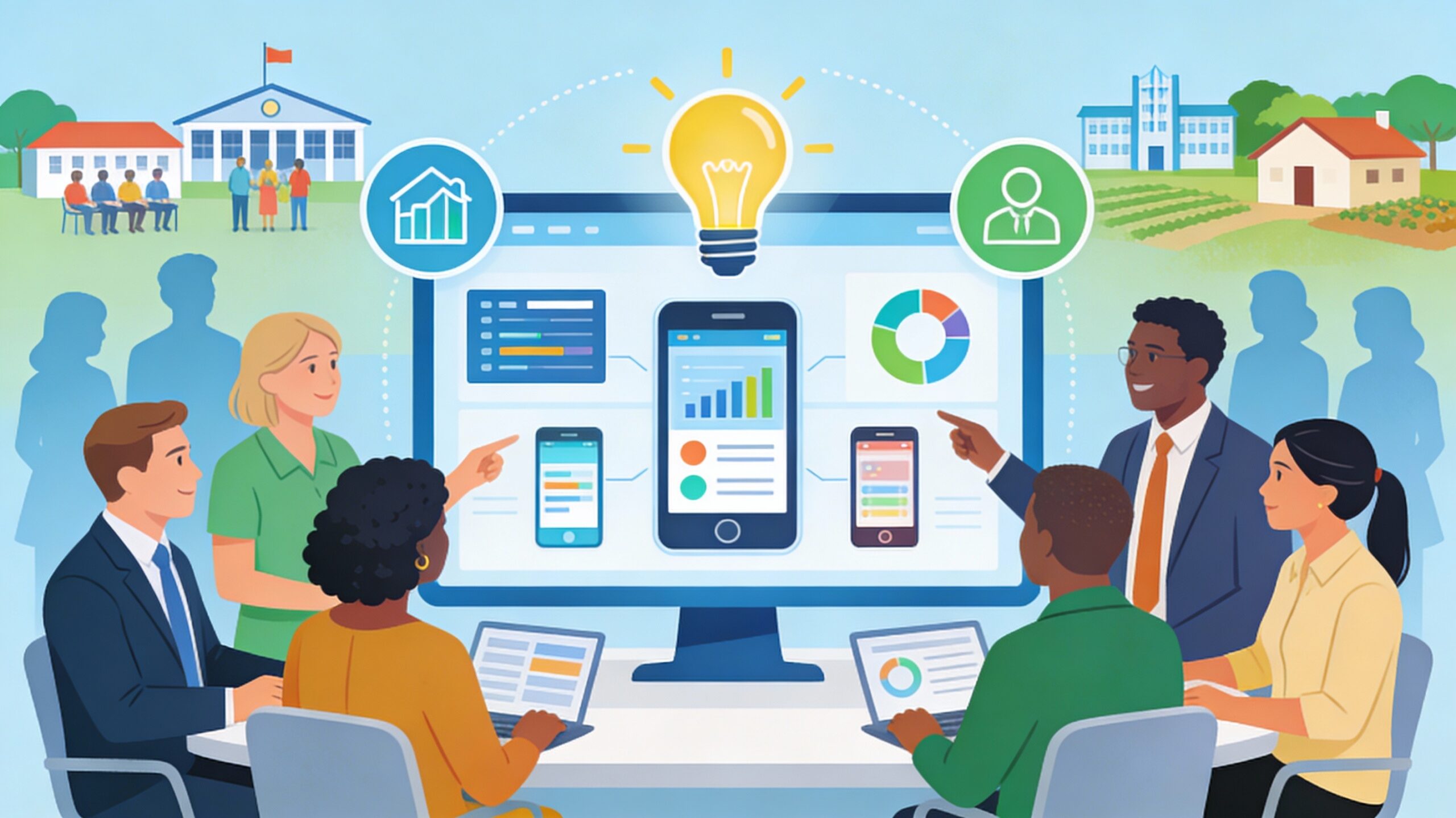
Corporate CSR is moving beyond cheque-book philanthropy and one-off volunteering days towards long-term, technology-driven partnerships that co-create innovative solutions to real social problems. For NGOs, this creates a powerful opportunity: design employee engagement activities where corporate teams do not just “volunteer” but co-create tech-for-good solutions that transform communities and strengthen internal systems.
Why CSR engagement must move to social innovation
Traditional CSR volunteering (tree plantations, charity events, visits) builds feel-good moments but often struggles to create sustained, measurable change. In contrast, skills-based and innovation-led engagement models link employee expertise with real NGO challenges, generating deeper impact for communities and higher satisfaction for employees and leadership.
- Companies increasingly see CSR as strategic, using data, AI, and digital tools to improve transparency, monitoring, and community outcomes.
- NGOs that can host tech-enabled projects (data systems, digital platforms, dashboards) are more likely to be seen as long-term innovation partners instead of just implementation vendors.
Principles for designing meaningful engagement
Before jumping to activity ideas, NGOs need a clear design approach so that employee engagement is not just “innovation theatre”. A few core principles can guide program design.
- Start with real, validated problems
- Use your field work to identify concrete pain points: tracking attendance, monitoring case progress, capturing stories, or managing donor data.
- Translate these into clear problem statements and success metrics (e.g., “reduce manual data entry by 50%”, “real-time dashboards for 5 locations”).
- Align with corporate skills and business strengths
- Map the company’s capabilities (IT, data analytics, design, product, cybersecurity, communication) to your own digital and innovation gaps.
- Co-create formats that use employees’ primary skills, which research shows leads to stronger impact and higher engagement than generic volunteerism.
- Blend learning, doing, and reflection
- Add short inputs on the social issue, community context, and ethical use of technology before employees start building solutions.
- Close with reflection and story-sharing so employees can connect their work to real lives, not just to deliverables.
Activity ideas NGOs can offer CSR partners
Below are practical, technology- and innovation-focused formats that NGOs can pitch and design with corporate partners. These can be run as single events or as part of an annual engagement calendar.
- Social innovation hackathons
A social innovation hackathon brings corporate employees and NGO teams together for an intense sprint (from 24 hours to a few weeks) to build tech-enabled solutions for real program challenges.
Potential problem themes:
- Mobile data collection for field staff
- AI-assisted early warning alerts (e.g., dropouts, health risk)
- Dashboards for CSR impact reporting and visualization
What the NGO does:
- Curates real problem statements, user journeys, and data samples from the field.
- Brings program staff and, where appropriate, community voices into the design and feedback process.
What the corporate brings:
- Employees with tech, design, project management, and product skills.
- Access to tools such as cloud credits, dev environments, and security guidance.
The value:
- Employees feel they are using their best skills for social good while learning about new contexts.
- NGOs walk away with prototypes or MVPs(Minimum Viable Product) that can later become fully funded CSR projects.
- Skills-based tech volunteering pods
Skills-based volunteering uses the core professional expertise of employees to strengthen nonprofit capacity. Instead of one-off workshops, NGOs can frame 6–12 week “pods” with defined outputs.
Sample pod themes:
- Setting up or improving a CRM or beneficiary database
- Building simple impact dashboards using existing program data
- Automating recurring tasks (donor emails, SMS reminders, form digitization)
Design features:
- Small teams (4–6 employees) working with a clear brief, timeline, and NGO counterpart.
- Delivery milestones: discovery, prototype, testing, handover with documentation and training.
Impact:
- Studies on skills-based volunteering indicate higher operational efficiency and stronger fundraising outcomes for NGOs when tech-skilled volunteers support digital systems.
- For employees, these projects double up as leadership and innovation development opportunities, which HR and L&D teams value.
- Digital literacy and STEM engagement with communities
For companies in IT, telecom, edtech, BFSI, or engineering, NGOs can design CSR engagement where employees directly support digital and STEM learning for communities.
Possible formats:
- Virtual or in-person coding clubs and robotics labs for adolescents.
- Cyber-safety and basic digital literacy sessions for women’s collectives or grassroots leaders.
- Financial literacy and digital payments sessions for micro-entrepreneurs.
NGO role:
- Identifies beneficiary groups, designs curriculum, and ensures contextualization.
- Measures learning outcomes and captures stories for CSR reporting, showcasing how employees’ contributions build future-ready communities.
- Data-for-impact labs
Many NGOs collect large amounts of data but underuse it for insights and communication; this is a space where corporate analytics and technology teams can add immense value.
Activity idea:
- “Impact Data Lab” where employees volunteer as data analysts, visualization experts, or data engineers for a fixed period.
Typical outputs:
- Cleaned and structured program datasets and basic data quality checks.
- Dashboards that track key indicators like enrolment, attendance, outcomes, or case resolution over time.
- Simple models or rules that flag high-risk cases or locations for early intervention.
Why corporates like it:
- Supports their need for robust CSR metrics, ESG disclosures, and impact narratives.
- Provides meaningful stretch projects for employees who want to apply their skills beyond commercial work.
- Tech-for-good design sprints
Design sprints are short, structured processes where cross-functional teams move from problem to tested prototype in 3–5 days. NGOs can use this format to shape new digital solutions without heavy upfront investments.
Elements of a CSR design sprint:
- Day 1: Understand the social problem and map the user journey.
- Day 2–3: Sketch and decide on solutions; design low- or no-code prototypes.
- Day 4–5: Test with internal users or small community samples and refine.
Participation:
- Mix of corporate employees, NGO staff, and possibly youth/beneficiaries as co-creators.
- Facilitated by a design or innovation expert, with CSR teams ensuring documentation and follow-up.
Outcome:
- A validated concept and prototype that can feed into the company’s CSR funding pipeline.
- Strong engagement, because employees see a full innovation cycle in a compressed time frame.
- Digital volunteering platforms and micro-projects
To scale engagement across locations and roles, NGOs can co-create a digital volunteering layer with corporates. This is especially useful for hybrid or global teams.
What this can look like:
- A curated list of micro-projects: content translation, UX review, data cleaning, accessible design checks, research briefs, or knowledge product creation.
- A simple portal or integration with the corporate volunteering platform, where employees browse, sign up, and log hours.
Benefits:
- Keeps engagement continuous rather than limited to “CSR Day”.
- Allows employees with niche skills (e.g., cybersecurity, UX, data visualization) to find meaningful roles that many NGOs otherwise struggle to access.
- Mentoring social innovators and youth
Many companies want leadership development formats that also create social impact; mentoring programs are a strong fit. NGOs working with youth, social enterprises, or grassroots innovators can anchor such programs.
Possible designs:
- Corporate employees mentor social entrepreneurs building tech-driven solutions (edtech, health tech, aggrotech, accessibility tools).
- Employees coach youth groups on problem-solving, digital tools, communication, and career readiness.
Value created:
- Employees practice coaching, empathy, and strategic thinking in unfamiliar contexts.
- NGOs help their beneficiaries and partner entrepreneurs access real-world expertise and networks, accelerating innovation.
Making it measurable and repeatable
For CSR and ESG teams, measurement is as important as the “good feeling” of volunteering; NGOs that can show clear numbers and stories will stand out.
What to track:
- Inputs: Number of employees engaged, skills brought in, hours contributed, geographies covered.
- Outputs: Number of prototypes built, tools implemented, beneficiaries reached, staff trained.
- Outcomes: Time saved, data quality improvements, process changes, and early evidence of better results for communities.
How to make it repeatable:
- Convert successful pilots into annual engagements: a yearly hackathon, recurring skills pods, or an ongoing mentoring cohort.
- Document playbooks and tool-kits so that future cycles require less setup and can scale to more employees or multiple NGOs within a portfolio.
How NGOs can pitch these ideas
Many CSR and HR leaders are aware of the potential of skills-based and innovation-led volunteering but struggle with partners who can translate it into action. NGOs can position themselves as co-designers of such experiences.
When approaching a corporate:
- Lead with a clear social problem statement and a matching engagement format (e.g., “data for impact lab”, “social innovation hackathon”).
- Show a simple one-page concept note outlining objectives, activities, roles, timelines, and impact metrics, emphasizing how employee skills will be fully utilised.
- Share examples or case stories (from your work or the broader sector) that demonstrate how technology-led engagement has created measurable change.
This shift—from transactional volunteering days to co-created social innovation—can transform CSR partnerships. NGOs that design thoughtful, tech-enabled employee engagement will not only unlock new value for communities, but also become strategic, long-term partners in a company’s innovation and ESG journey
Written by Deb who is a social impact worker and part of letzrise team and stays in Bengaluru.