

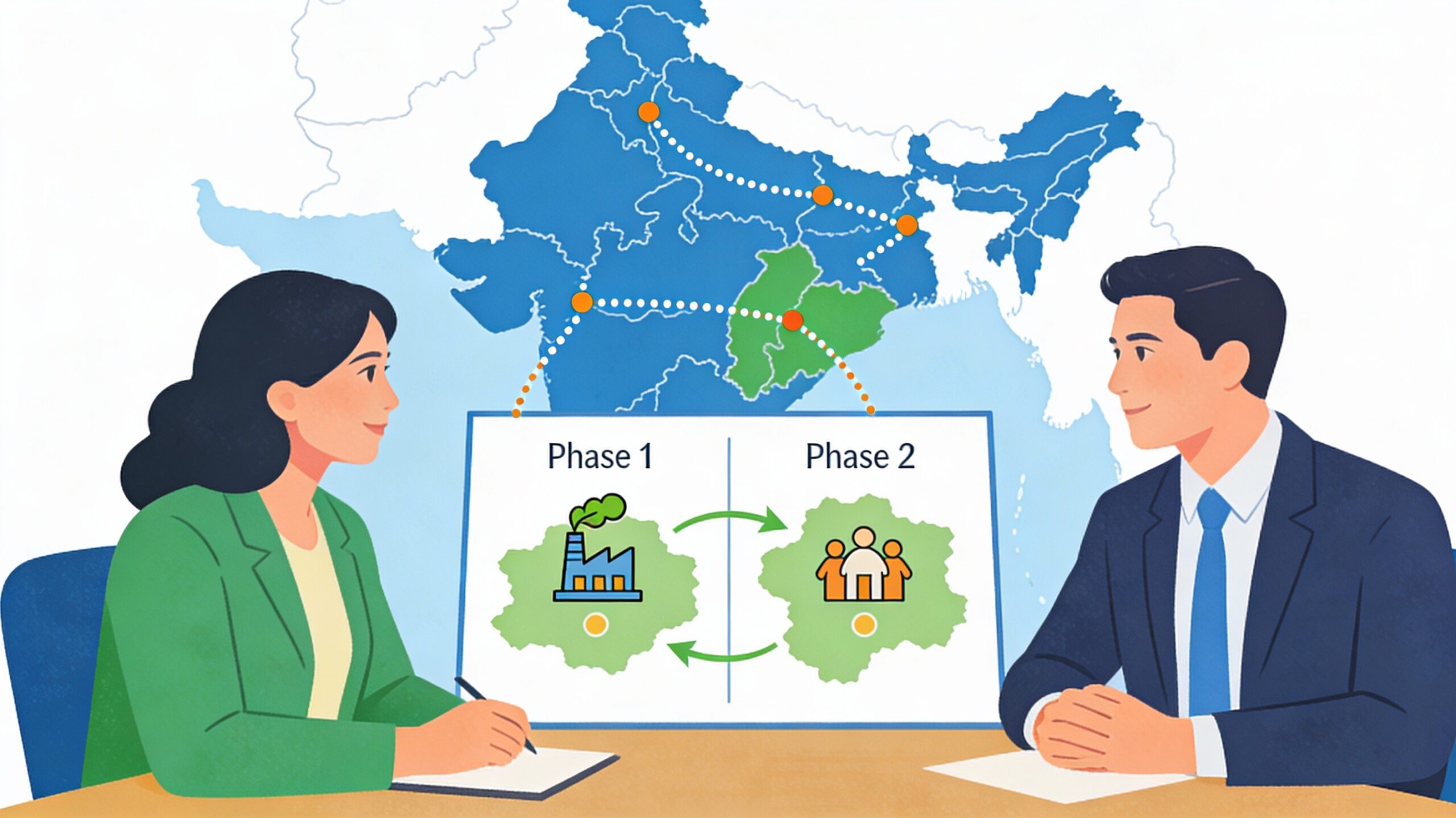
Many companies restrict CSR to plant locations and priority districts, but NGOs can still grow work in new geographies by using a phased “foot-in-the-door” approach, brand-aligned arguments, and flexible co-funding models. This blog outlines how to respect corporate location priorities while quietly building a pathway into your own core areas over time.
When geography blocks good work
A common CSR roadblock is “We only fund where we operate,” which concentrates spending around industrial hubs and bypasses needier regions. This often stems from the “local area preference” in India’s CSR rules being treated as a hard mandate, not a guideline, so plants and head-office states win most of the funding.
For NGOs, this means that new, high-need geographies struggle to attract CSR funds, even when the model is strong and impact is clear. Instead of fighting this head-on, it is often smarter to enter through their preferred geographies and then expand once you have proof and trust.
Start with a “foot-in-the-door”
If a corporate’s priority geography still fits your mission and operational capacity, begin there. Focus the first year on clean execution: strong outcomes, compliant reporting, and visible stories that make the CSR team look good internally.
After Year 1, use that success as leverage. Propose Phase 2 that adds 1–2 new geographies where you already work or want to deepen your footprint, clearly explaining similar needs, your existing presence, and how this supports a larger SDG or brand narrative (for example, pan-India child protection or rural livelihoods).
Frame new areas as “Phase 2: Scale & replication”
Corporates are more comfortable expanding a proven model than betting on something entirely new in an unfamiliar district. Reframe your ask not as “Please also fund this other place,” but as “Phase 2: Scale and replicate a successful model across new districts/states.”
Use simple visuals:
- Phase 1: Pilot in their plant district or priority state, with key results.
- Phase 2: Replication in your core geography, with shared indicators and consolidated reporting.
The narrative becomes: “You’ve helped prove this in State X; now let’s take it to Y and build a flagship multi-state programme that carries your name.”
Align new geographies with their business logic
When proposing new districts, link them to the company’s real-world footprint beyond just plant addresses. Helpful angles include:
- Market presence: where their customers or beneficiaries live.
- Supply chains: source districts for raw material or labour.
- Brand narrative: promises around “for every child,” “for rural India,” or “inclusive growth.”
For example: “This district is a major out-migration belt sending workers to your operating states; investing here strengthens human capital and child protection in your labour catchment.” This reframes “your district” as a strategic extension of their existing ecosystem.
Use flexible funders to prove new areas
Not every funder is geography-locked. Corporate foundations, national and international foundations, HNIs, and retail donors often have more freedom to support your core geography or innovation pilots in new regions.
A smart sequence is:
- Use these flexible sources to start and stabilise work in priority new geographies.
- Document results rigorously and package them into sharp, CSR-friendly decks and reports.
- Present this “proven field lab” to geography-restricted corporates later as a ready-made model they can plug into.
Offer co-funding and shared geography models
Where possible, design programmes that operate across multiple districts with multiple funders. For example:
- Corporate A funds your model in its plant district.
- Foundation B backs the same model in your preferred district.
- You manage it as one programme, with harmonised indicators and consolidated learning.
To Corporate A, you present this as a larger, multi-location initiative where they are a key anchor partner, which often increases their interest and perceived impact without forcing them to move outside their internal geography rules immediately
Written by Deb who is a social impact worker and part of Letzrise team and stays in Bengaluru.