

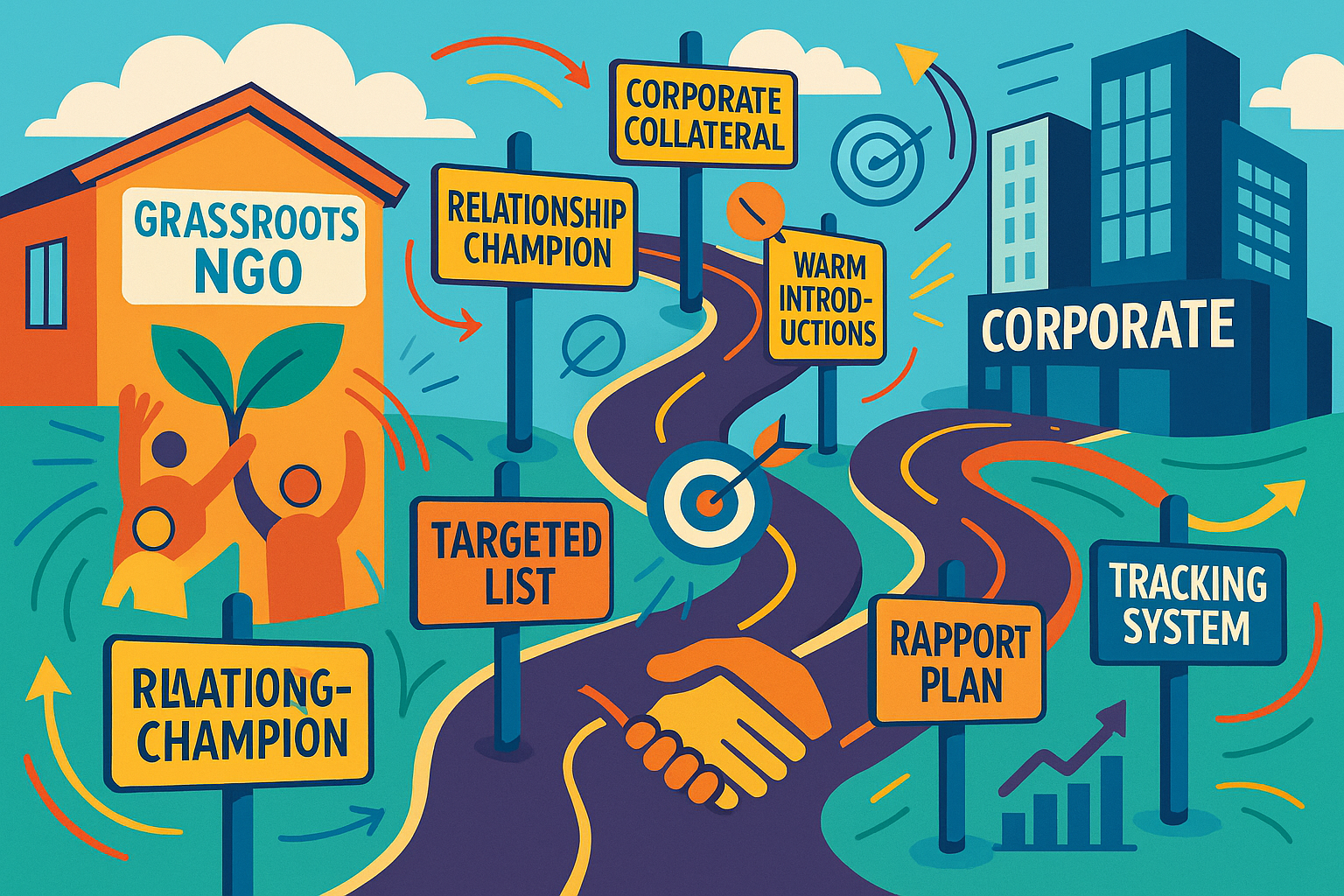
If you’re working with a community-driven NGO, you’ve probably felt the sting: corporates say they want impact, but they’re reluctant to give grants to grassroots organizations. Why? It’s not your passion—it’s the system, the strategy, and how you communicate your work.
Here’s a battle-tested roadmap I’ve used to help NGOs bridge this gap, get into the corporate world, and actually win the support you deserve.
- Appoint a CSR Relationship Champion
Success starts with one accountable face for corporate partnerships. Even if you’re small, nominate someone (program manager, founder, fundraiser) as your Head — CSR Partnerships. Their mission:
- Build and maintain relationships with 30–50 priority CSR/ESG prospects.
- Coordinate all internal readiness docs, reporting, and data.
Why bother? Corporates want to deal with reliable, consistent partners. Relationships are built with people, not faceless teams.
Pro-tips:
- Update this person’s JD regularly.
- Block out at least 5 hours/week just for CSR relationship work.
- Translate Your Community Work into ‘Corporate’
Most NGOs lose potential partners in the first five minutes—because corporates can’t decode your impact. Fix this with three power-packed collateral pieces:
- A 2-page organization profile: clear problem, your unique model, impact numbers, and one sharp story.
- 1-page project concept sheets for key programs (with budget options and SDG mapping).
- 1-page “Why Partner With Us”—showing, in their language, how you power their goals (brand value, employee engagement, compliance).
Always: Share these collateral pieces in at least 80% of first meetings. Get feedback. Improve. Rinse and repeat.
- Target the Right CSR Companies
Don’t chase Tatas and Reliance just because they’re big. Map your natural fits:
- 30–50 companies, filtered by theme, geography, and typical grant size.
- Build a simple sheet: sectors, contact people, and status.
- Identify decision-makers via websites and LinkedIn (CSR/ESG/HR heads).
Keep it lean: Add at least 10 new CSR contacts every month.
- Use Warm Paths, Not Just Cold Emails
Mass cold emails go into the void. Map who your team knows — alumni, friends, ex-corporate people — and get warm introductions.
- Request info chats, not money.
- And yes, still send sharply-crafted cold outreach (short, focused, and personalized).
Aim for: At least 5 warm intros and 10–15 smart cold emails every month.
- 90-Day Rapport Building Plan (Per Company)
Here’s how real relationships grow:
- Touchpoint 1: Listen more in your intro call. What are their priorities and challenges?
- Touchpoint 2: Send a tailored concept note reflecting their words and needs.
- Touchpoint 3: Invite them for professional, no-fluff site visits.
- Touchpoint 4: Provide ongoing value—share updates, invite them to events, keep the door open, even before funding.
Measure everything: Number of CSR touchpoints, conversion rates, and repeat donors.
- Track Your Relationships Religiously
Without systems, relationships vanish when your staff moves on. Use a simple Google Sheet: company, contact info, interaction dates, next steps, stage.
Review monthly: Who’s dormant, who’s engaged, who’s moved to proposal or funding?
Now Position and Pitch Like a Pro
- Craft one flagship ‘umbrella’ program (e.g., “4E Futures: From Learning to Livelihoods”).
- Pitch only to companies in your target geographies with aligned themes.
- Use a “Why Partner” 1-pager, a crisp intro email template, and a trust-building, discovery-led meeting script.
Here’s Your Kickstart Checklist:
- Appoint a CSR Relationship Champion.
- Build and use 3 core collateral pieces.
- Map 30–50 target companies.
- Do at least 5 warm intros, 10–15 cold emails, and 3–4 rapport-building touchpoints per company.
- Track it all.
Final Word: Corporate fundraising is systematic, not accidental. With the right roadmap and relentless tracking, you’ll move from chasing grants to being a go-to partner for purpose-driven companies.
Want help unlocking your NGO’s fundraising superpowers? Reach out—let’s make transformation happen together.
Written by Deb — a Bengaluru-based social impact worker and consultant at Letzrise Consulting Services LLP, helping grassroots NGOs build sustainable partnerships with corporates.