

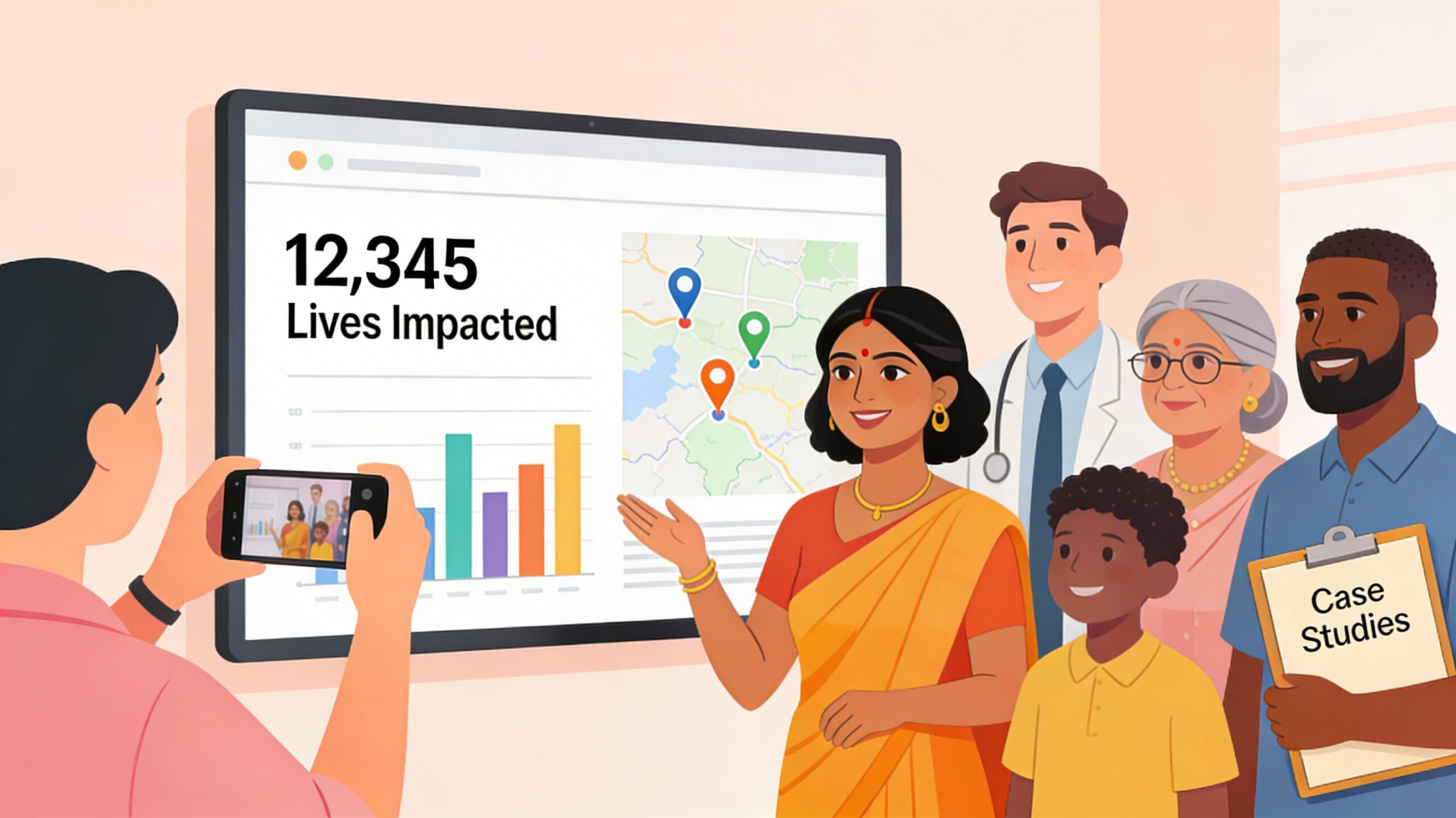
Many NGOs do powerful work on the ground, but still lose out to others who “look” more impressive because they present their impact better. The problem is usually not the work, but how clearly and consistently it is communicated to donors and corporates.
The Core Problem: Invisible Impact
Corporates, funders, and even individual donors are flooded with proposals and reports. If your impact is buried in long documents, complex language, or scattered numbers, people will struggle to understand why your work matters. To stand out, NGOs need simple, repeatable “impact assets” that show change clearly in 5–10 minutes.
This blog shares four low-cost ways to make your impact visible: a simple impact deck, basic videos, a mini data dashboard, and a case study library.
- Create a Simple Impact Deck (10–12 Slides)
Think of your impact deck as your “first impression” document for every corporate or donor conversation. It should be short, visual, and focused on outcomes, not only activities.
A practical 10–12 slide structure could be:
- Problem statement: What issue you are solving and for whom, in simple language.
- Your solution: Your approach, model, and where you work.
- Reach and key numbers: People reached, locations covered, years of work.
- Before–after change: 2–3 slides with indicators that show progress over time.
- 3–4 strong stories: Short human stories with photos that bring the numbers alive.
- Partners and credibility: Logos, testimonials, awards, or recognitions.
- Future plan and funding needs: Where you are going next and what support you need.
Use this same deck in every first meeting and in cold outreach; update numbers quarterly so it stays fresh.
- Use Low-Cost Video Storytelling
You do not need a production house to tell good stories. A basic smartphone, natural light, and simple editing apps like InShot or Canva are enough to get started. Short, honest videos often perform better than over-produced films because they feel more real.
Focus on three types of videos:
- 2–3 minute project explainers: Explain the problem, your solution, and the change created in one location or program.
- 1-minute beneficiary stories: A single person speaking about their journey “before and after” your intervention.
- 30–60 second before–after clips: Visuals of the same place or group at two time points, with a simple overlay of key numbers.
Keep the language simple, use subtitles in English and local language, and shoot horizontal versions for presentations and vertical for social media.
- Build a Mini Data Dashboard
Numbers help corporates and CSR teams quickly understand the scale and depth of your work. You can start with a simple dashboard in Excel or Google Sheets and later move to tools like Google Data Studio or similar platforms.
Begin with three basic data sets:
- Beneficiaries by gender, age, and geography.
- Before–after stats: Income, learning levels, attendance, health indicators, or other relevant metrics.
- Program delivery: Number of sessions, visits, trainings, or other key activities.
Convert these into 4–6 simple charts that can be copied into reports, your website, and presentations. The goal is to move from “we helped many people” to “we helped 1,250 women across 4 districts increase their monthly income by 30% in 18 months.”
- Create a Case Study Library
Most NGOs write one-off success stories and then forget them. A structured case study library turns these stories into reusable assets for proposals, pitches, and social media. Over time, this becomes your biggest storytelling strength.
Use a simple, repeatable structure:
- Before: Context, challenges, and baseline situation for a person, group, or community.
- Intervention: What your organization did, for how long, and with what resources.
- After (with data): Tangible change supported by numbers and observations.
- Quotes: Short, authentic quotes from beneficiaries, staff, or partners.
Tag each case study by theme (education, health, livelihoods, gender, etc.) so you can quickly attach the right story to the right proposal or meeting.
- Measure What Matters: KPIs for Impact Visibility
To make this work, track not only your program KPIs but also your “impact communication KPIs.” When you measure and review them, your team will take storytelling and reporting more seriously.
Some simple KPIs:
- Number of impact assets created: decks, videos, dashboards, and case studies per quarter.
- Number of times these assets are shared: in corporate meetings, donor calls, emails, and proposals per quarter.
- Quality feedback from corporates and donors: words like “clarity of impact,” “good reporting,” or “strong stories” captured from emails and meeting notes.
Over time, you can also track how many new leads, renewed grants, or upgrades in funding are influenced by these assets.
Written by Deb who is a social impact worker and part of letzrise team and stays in Bengaluru.