

Most NGOs don’t struggle with CSR money because companies don’t care; they struggle because “fundraising” is nobody’s real job. This blog shows how to fix that without a big budget by creating clear ownership, simple systems, and a pathway to a dedicated fundraising role.
No fundraising owner, no predictable CSR
In many organisations, CSR fundraising is something people squeeze in between programme reviews and audits, so it stays reactive, last-minute, and inconsistent. Without a named owner, proposals slip, follow-ups get delayed, and promising conversations die quietly because “everyone and no one” was responsible.
The good news: you don’t need a large fundraising department to change this. You just need one focal person, a small virtual squad, and a few basic systems that make fundraising work visible and repeatable.
Appoint a clear CSR focal person
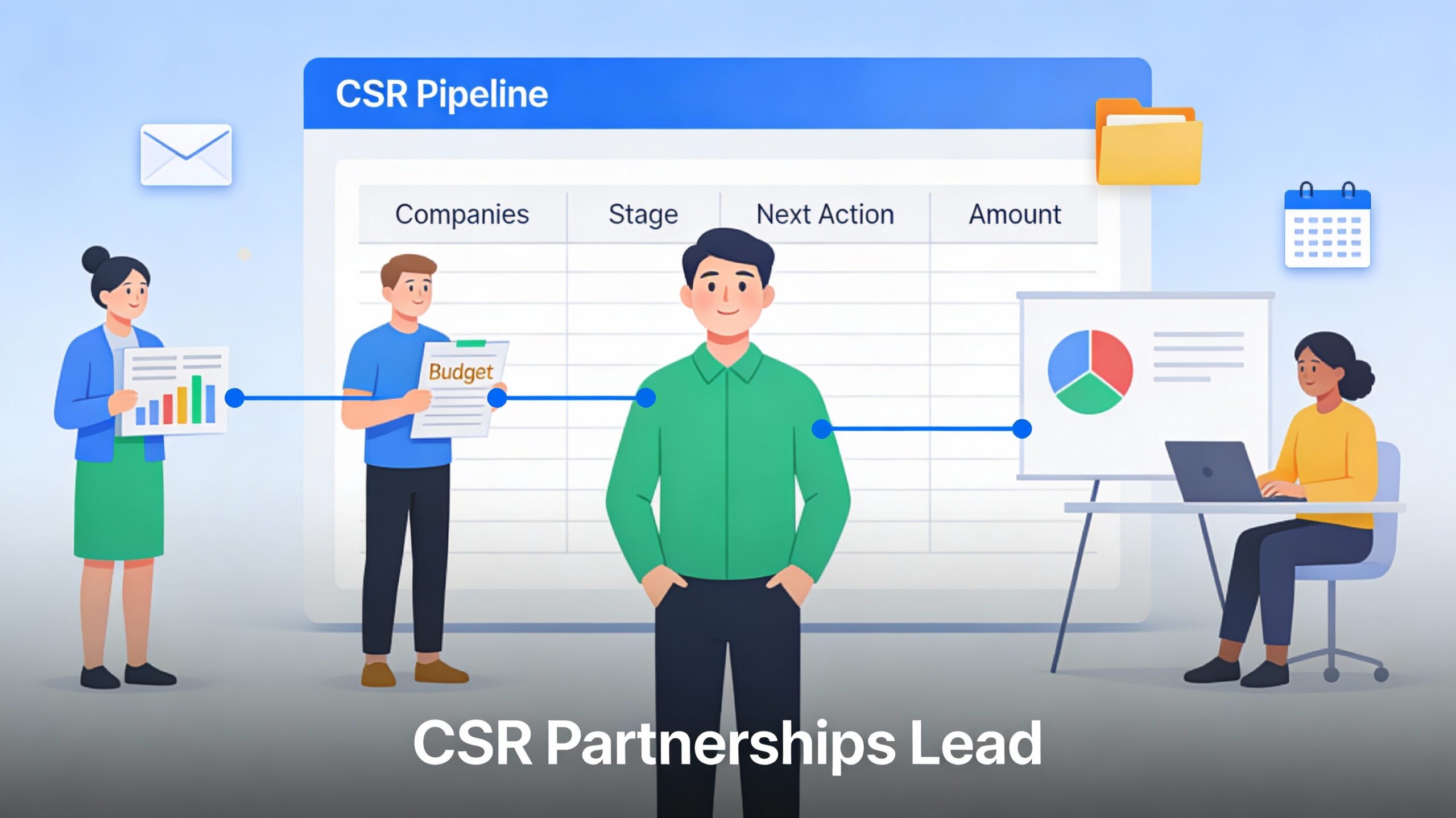
Start by naming one staff member as “CSR Partnerships & Resource Mobilisation Lead”, even if this is only 40–50 percent of their time to begin with. This person’s core responsibilities should include maintaining the CSR pipeline, coordinating proposals, doing timely follow-ups, and keeping the donor database and documents updated.
They also take the lead on basic research: mapping new companies whose CSR themes match your work, identifying decision-makers, and tracking application windows and formats. The goal is not that they do everything alone, but that they are the single point of coordination and accountability.
Build a “virtual fundraising squad”
Around this focal person, create a small cross-functional “fundraising squad” of 3–4 people: one programme person to provide content, data and outcomes; one finance person for budgets and compliances; one communications person for decks, stories and visuals; and one leader or ED for relationships, approvals and big-picture positioning.
This squad model mirrors how high-performing fundraising teams blend strategists, relationship builders, analysts and storytellers, but in a lean, realistic way for smaller NGOs. The Partnerships Lead’s job is to convene this group, set priorities, and ensure every live opportunity has a clear next step and owner.
Put in place simple, repeatable systems
Even a tiny team can be powerful if it runs on simple systems. Start with a CSR pipeline tracker in Excel or Google Sheets that captures company name, contact, theme fit, current stage, last contact date, next action, and an estimated probability of success. This gives leadership a quick snapshot of where things stand and stops opportunities from silently dropping off.
Standardise proposal templates, budget formats, and reporting structures so the team is not reinventing the wheel each time. Store everything in a central online folder (such as Google Drive) for proposals, MoUs, reports, and donor profiles so that information survives staff changes and audits.
Plan for a dedicated fundraising role
From day one, be explicit that the goal is to grow into a full-time CSR fundraising role over 12–18 months. For example, set a trigger such as: “Once we reach ₹X lakh/crore per year in CSR funds, we will hire a full-time CSR fundraising manager,” and put this in your fundraising plan and board discussions.
As you design proposals, try to build a portion of the future fundraising role’s salary and essential costs into project overheads, staying within CSR norms and reasonable admin caps. This way, growth in CSR income naturally funds the capacity required to sustain and expand it.
Invest in basic capacity building
Support your focal person and squad to grow their skills. Encourage them to attend CSR and fundraising webinars, learn proposal writing and impact communication, and pick up basic M&E language so they can speak comfortably with corporate and foundation partners. Active networking on LinkedIn with CSR heads and foundation leaders can open doors that cold emails rarely do.
Over time, these investments build not just a stronger pipeline, but a genuine fundraising culture where everyone understands that bringing in resources is part of their role in advancing the mission.
Written by Deb who is a social impact worker and part of Letzrise team and stays in Bengaluru.